
Ther'Happy
Do you know that approximately 70 millions of people are affected by Obsessive-Compulsive Disorder (OCD) ? These obsessions and compulsions can severely disrupt daily life, relationships, and overall well-being. The journey of individuals with OCD often involves seeking professional help from therapists and psychiatrists, undergoing various treatment modalities, and striving to manage symptoms effectively.
Health Companion
Product Design
Figma
The Problem
Despite the availability of evidence-based treatments such as cognitive-behavioral therapy and medication, many individuals with OCD continue to face challenges in tracking and controlling their disorder on a day-to-day basis. This context highlights the need for additional tools and resources that can complement therapeutic interventions and empower individuals with OCD to manage their symptoms more effectively, ultimately enhancing their quality of life.
70
millions of people are diagnosed with OCDs
76%
of people with lifetime OCD suffer from anxiety
+45%
individuals with OCD are at a higher risk of suicidal thoughts and behaviors
The concept
In response to the need for better support for individuals with OCD, this case study introduced Ther'Happy, a user-driven companion app. It is primarily a mobile phone app designed to support individuals with OCD. It can also be seamlessly integrated with a connected smartwatch for added convenience and real-time monitoring.
Ther'Happy was conceptualized based on extensive research and aimed to address key challenges and offer practical solutions:
Limited Access to Continuous Support: The app provided ongoing support and resources, bridging gaps between therapy sessions, and offered educational materials for practicing healthy behaviors.
Self-Awareness and Coping: To help individuals manage intense anxiety and distressing thoughts, Ther'Happy encouraged users to journal their thoughts and emotions and track their progress in managing OCD symptoms.
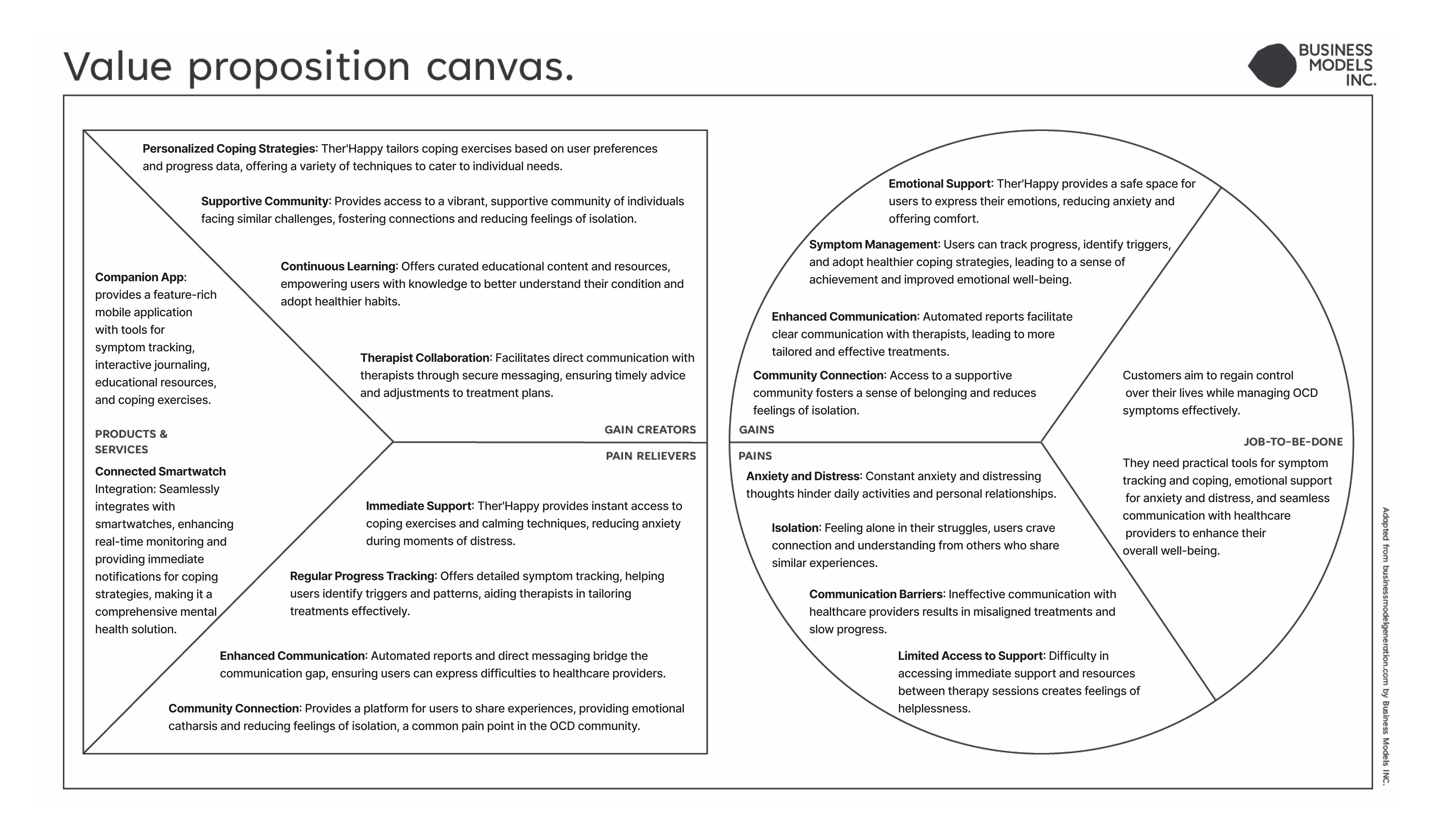
Communication with Healthcare Providers: For effective communication with therapists and psychiatrists, the app generated automated reports based on user activity.
Through this project, the potential of technology to augment traditional therapeutic approaches and improve the daily lives of those living with OCD was explored, resulting in the development of Ther'Happy with its educational resources, symptom tracking, interactive journaling, and automated reporting features.
Educational Resources
Provides materials and tools to help individuals. These resources aim to complement therapeutic interventions
Communication with Healthcare Providers
aimed to facilitate this by generating automated reports that could be shared with therapists and psychiatrists.
Interactive Journaling
An interactive journaling feature that encourages users to document their thoughts and feelings
Real Time Localization
It can detect stress area, alerting the user to potential triggers or moments when they should engage with the app's coping tools.
Coping Strategies
If the user's heart rate spikes, the watch can prompt them to perform a relaxation exercise.
Health Integration
Incorporate physical activity and health data to Encouraging users to maintain healthy routines.
The Process
To develop Ther'Happy, extensive research was conducted to gain insights into the needs and experiences of individuals with OCD. The research involved the following steps:
Interviews: Six individuals with OCD were interviewed to understand their challenges, triggers, coping mechanisms, and the kind of support they wished to receive. These interviews provided a foundation for empathy and understanding.
Consultation with Mental Health Professionals: Mental health professionals who specialize in treating OCD were consulted to gain insights into the clinical aspects of the disorder, effective therapeutic strategies, and areas where a digital companion app could complement their work.
Personas: The information gathered from interviews and consultations was used to create detailed personas representing different profiles of individuals with OCD. These personas helped in understanding the diverse needs of the target audience.
Experimental Protocol: An experimental protocol was developed to identify potential features and interventions that could aid individuals with OCD in managing their condition effectively.
Empathy Map: An empathy map was created to visualize the thoughts, feelings, actions, and pain points of individuals with OCD. This helped in designing features that catered to their emotional and practical needs.
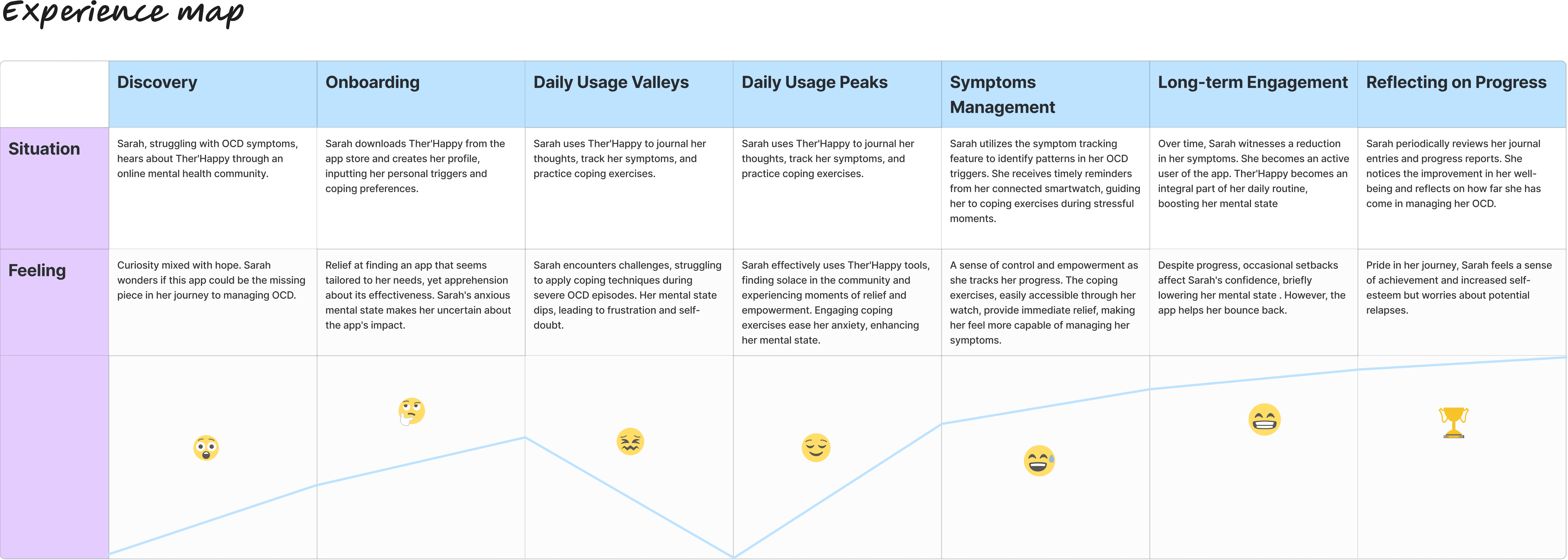
Experience Map: An experience map was generated to chart the journey of individuals with OCD, from the onset of symptoms to seeking help and managing their condition over time. This helped in identifying key touchpoints for the companion app.
Conclusion
Through this case study, the potential of technology to augment traditional therapeutic approaches and improve the daily lives of those living with OCD was explored, resulting in the development of Ther'Happy with its educational resources, symptom tracking, interactive journaling, and automated reporting features